

Agriculture has moved from mechanisation to satellite-guided precision farming and then to connected sensors and cloud analytics. The next step, often described as Agriculture 5.0, adds autonomous decision-making, human-AI collaboration and digital trust infrastructure. A 2026 Frontiers study combines reinforcement learning, neutrosophic regression, IoT telemetry and blockchain to model crop losses and secure transactions across six crops including rice, banana, turmeric, coconut and cocoa. The concept matters because farming is no longer becoming merely data rich - it is becoming executable. Sensors can observe conditions, AI can recommend or initiate actions and smart contracts can settle payments or release insurance when pre-agreed conditions are met. That turns agricultural data from a management aid into part of the economic infrastructure of the farm.
How the agricultural technology stack is changing
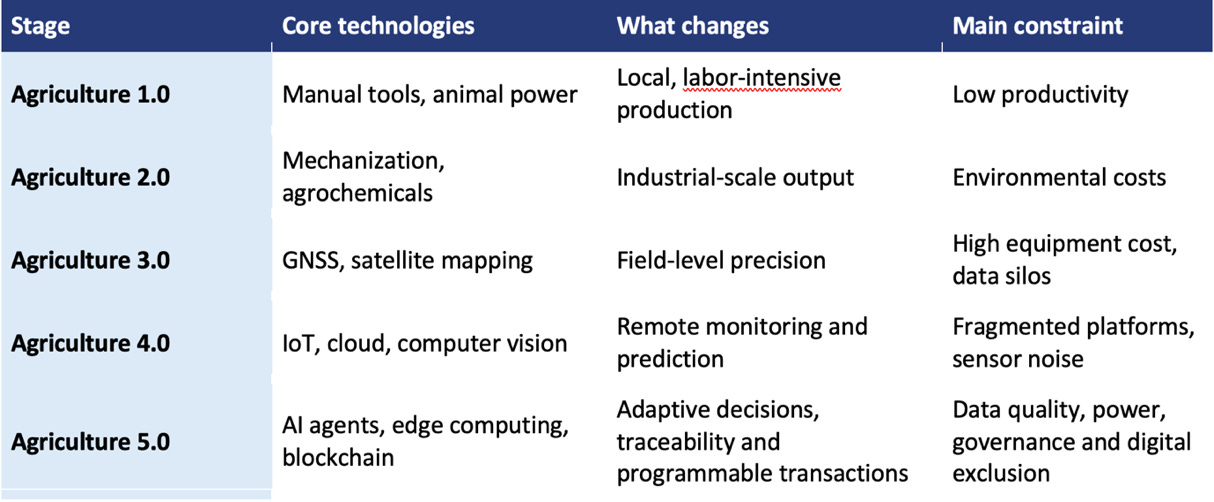
Source: Teamblockchain
The original research uses reinforcement learning to tune …
