

In 1694, a radical proposal hit the desks of the English Parliament: a National Land Bank that would issue paper notes backed, not by gold but by English soil. The idea was simple yet explosive, turn illiquid land into liquid credit, expanding the money supply and mobilising dormant assets for the nation’s good. It failed. The Bank of England (BOE), founded the same year on bullion, succeeded. Fast-forward 332 years and look at this comparison:
Stablecoins v National Land bank
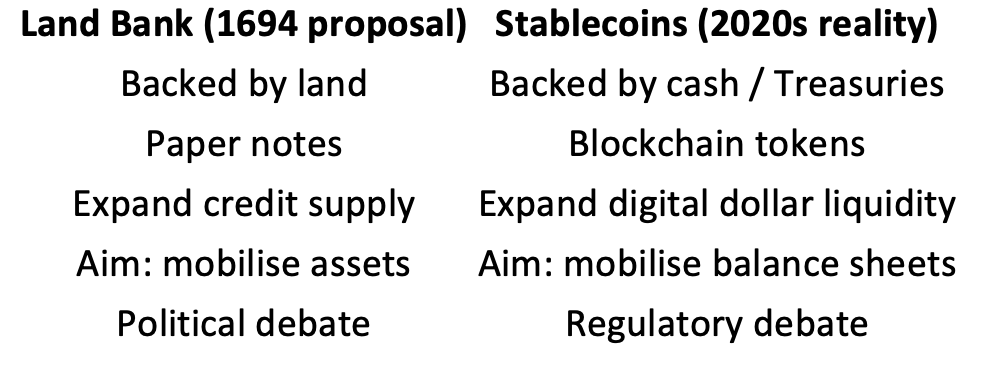
The parallel is uncanny, only this time the experiment is not failing - it is scaling inside corporate balance sheets right now. Under English law, companies do not need legal tender to settle obligations; freedom of contract is absolute outside the narrow courtroom rules of legal tender. The Bank of England itself admits legal tender “has a very narrow technical meaning” and does not compel businesses to accept cash or bank transfers in everyday commerce. That single sentence quietly upends everything the BOE is …
